
Wake up without the soreness.
A sore jaw, a dull headache, teeth that seem to be wearing down, grinding or clenching at night is often the reason. A custom night guard is fitted to your bite specifically, so it actually protects you instead of sitting in a drawer.
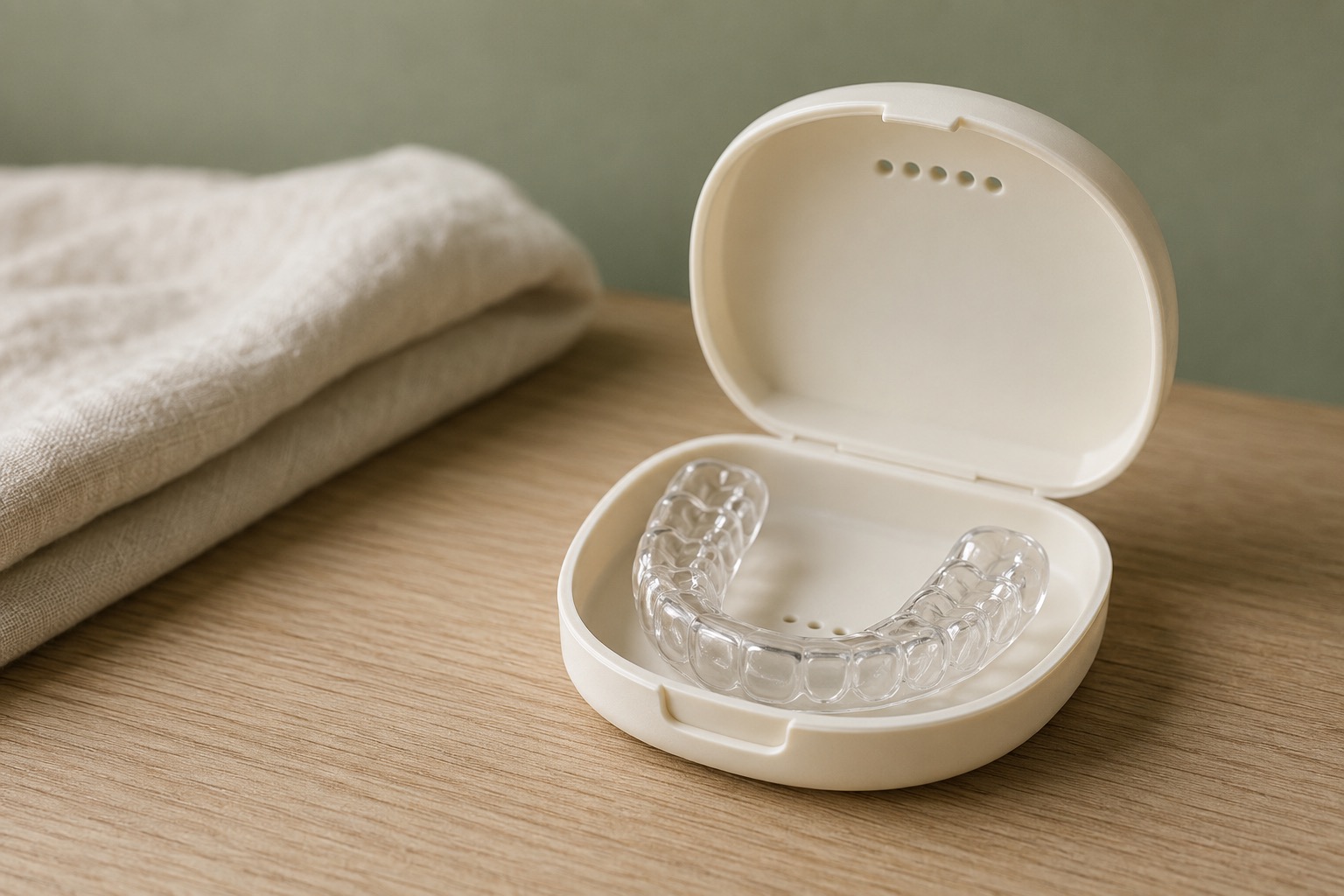
Do you grind or clench your teeth?
Morning headaches, jaw soreness, or facial muscle fatigue
Worn, chipped, cracked, or unusually sensitive teeth
A clicking jaw or sleep that gets interrupted
Some people are told about it by a partner who hears the grinding at night. Others only find out when a dentist points out the wear pattern. Either way, it's worth a look.
What is bruxism?
Bruxism is the clinical term for grinding or clenching your teeth, most often during sleep, though some people do it during the day too, usually without noticing. It's typically driven by some mix of stress, sleep habits, and how your teeth come together when you bite down.
Because it usually happens while you're asleep, most people don't know they're doing it. A dentist can often spot the signs, flattened or worn edges on your teeth, before you've connected the dots between your morning headaches and what's happening overnight.
What it protects, and what we do differently.
Protects your enamel
A guard creates a barrier between your teeth, shielding them from the wear that grinding causes over months and years.
Eases pressure on your jaw
Cushioning your bite tends to reduce the muscle strain behind morning soreness, though it varies from person to person.
Honest, no-pressure evaluations
We don't hand a night guard to everyone who mentions grinding. We start with a real look at your teeth, jaw, and symptoms.
A night guard protects your teeth and eases the physical strain of grinding. It doesn't stop the grinding itself, and it isn't a cure for TMJ. We'll be upfront with you about what it can and can't do.
Why fit is the whole story.
Fit. A store-bought guard uses a one-size boil-and-bite process. A custom guard is molded from an impression of your own teeth, so it fits precisely and doesn't shift while you sleep.
Comfort. A guard that doesn't fit well is a guard people stop wearing. Ours are built to be worn every night, not left in a drawer after a week.
Materials & durability. Professional-grade materials hold up to nightly grinding longer than the softer plastic typically used in store-bought versions.
Protection. A closer fit means more even coverage across your back teeth and any existing dental work, not just the front teeth a generic guard tends to reach.
Professional supervision. We check the fit over time and can tell if your bite or grinding pattern is changing, which isn't something a store shelf can offer.
How a custom night guard is made.
The evaluation
We look at your teeth, jaw, and bite, and talk through when the soreness or wear started.
Impressions
A precise impression of your teeth and bite, taken carefully so the fit comes out right the first time.
Custom fabrication
Your guard is made in a dental lab to your exact measurements, not a generic mold.
Fitting & adjustments
We check the fit in person and adjust anything that feels off before you take it home.
Ongoing care
We check in at future visits to make sure it's still fitting well and doing its job.
Caring for your night guard.
Rinse it and brush gently with a toothbrush each morning. Skip the toothpaste, it can scratch the material.
Keep it in its case when it's not in your mouth. Pets and drawers are both bigger threats than people expect.
We'll check the fit and condition at your regular visits, so bring it along.
A guard with visible wear or a cracked edge isn't protecting your teeth the way it should anymore.
Hot water, a hot car, or the dishwasher can warp the material. Clean it with cool or lukewarm water only.
Common questions about night guards.
How do I know if I need a night guard?
Morning headaches, a sore jaw, or teeth that look worn or feel newly sensitive are the most common signs. The only way to know for sure is an evaluation, since some wear patterns are only visible to a trained eye.
Will a night guard stop me from grinding?
For some people, yes, indirectly. Easing the physical strain can reduce how often it happens. But a guard's real job is protection, not a cure, so don't expect the grinding to disappear entirely.
Is it comfortable to sleep with?
Most patients adjust within the first week or two. A custom guard is thinner and fits more precisely than a store-bought one, which is usually the biggest reason people stick with it.
How long does it last?
It depends on how much you grind and how well it's cared for, but most custom guards hold up well for a few years before they need replacing. We'll check its condition at your regular visits.
Can I use a sports mouthguard instead?
They're built for different jobs. A sports mouthguard cushions against impact during activity. A night guard is designed for the slow, sustained pressure of grinding and clenching over hours of sleep.
Will insurance cover it?
It depends on your plan. Some cover night guards when there's documented wear or a related diagnosis. We'll help you check before anything is scheduled.
Can children need night guards?
It's less common, but it does happen, usually tied to specific bite or jaw concerns rather than routine grinding. If we notice signs during a child's exam, we'll talk it through with you before recommending anything.
What if my night guard feels uncomfortable?
Some adjustment is normal in the first week or two. If it still feels off after that, or feels like it's changed over time, bring it in. Adjustments are a normal part of getting the fit right.
Keep exploring: All Services · TMJ & TMD Therapy · Nervous Patients
Give your teeth a break tonight.
A short evaluation is how we find out whether a custom night guard makes sense for you.