
We can't promise your child will love the dentist.
We can promise a team that moves at their pace, explains everything in words they understand, and makes coming back feel normal instead of scary.
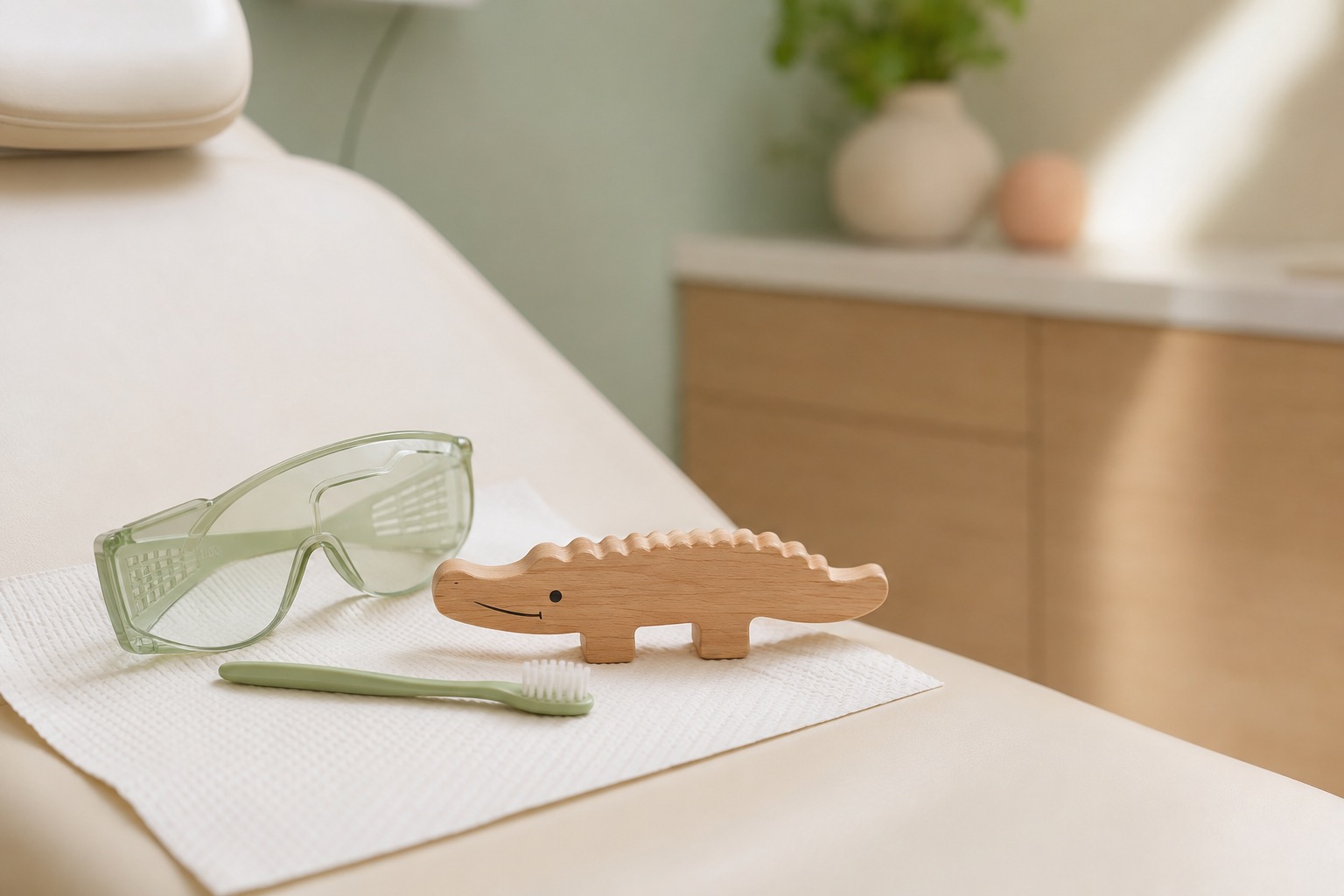
What actually happens during the visit.
A friendly welcome
Meeting the team first, the chair second. No paperwork or waiting thrown at your child before they've even said hello.
A gentle examination
A visual check of teeth, gums, and bite. We talk through what we're doing as we go, in words your child can follow.
Professional cleaning
Not every visit includes a full cleaning, especially early on. We'll tell you plainly what today's visit actually needs.
Fluoride treatment
A quick, tasteless treatment that strengthens enamel. We'll explain why we're recommending it, not just do it.
A growth and development check
We keep an eye on how their teeth and jaw are coming in, so anything worth addressing gets caught early, not after it's a bigger deal.
A few tips for home
Specific to your child, not a generic handout. Something to work on until the next visit.
Small mouths, but it's not small stuff.
Habits start early.
The habits your child builds now, brushing, and not fearing the dentist, tend to stick. A visit that goes well today makes the next one easier too.
Baby teeth matter more than they look like they should.
They hold space for adult teeth and help with speech and eating. A cavity in a baby tooth isn't something to just wait out.
Prevention is easier than treatment.
Catching a small problem early usually means a simple fix. Waiting usually means a bigger one, for a smaller mouth.
We're not aiming for perfect. We're aiming for better than last time.
We explain before we do.
Every step gets a kid-sized explanation first, in words they understand, so nothing feels like a surprise.
We follow their pace, not a schedule.
If a child needs a minute, or five, we take it. A visit that goes slower but goes well beats one that's fast and scary.
Small wins get noticed.
Sitting still, opening wide, asking a question, we notice it and say so. Confidence builds one visit at a time.
Parents stay close.
You're welcome in the room for as much of the visit as your child needs you there. We want you close by, not out in the waiting room wondering what's happening.
We tell you the truth, gently.
If a tooth needs watching instead of treating, we'll say so. You'll never wonder if a recommendation was really necessary.
It doesn't have to be a great visit to be a good one.
Some visits are easy. Some aren't. Either way, we're not grading how well your child did today, we're building toward next time being easier.
Earlier than most parents expect.
Around their first birthday, or within six months of their first tooth coming in, whichever comes first.
That's earlier than a lot of parents expect, especially if there are only a few teeth in so far. It's not too early. It's exactly on time.
After that, every six months is standard, though we'll tell you if your child's mouth needs a different rhythm.
What's included in children's dentistry here.
A visual check of teeth, gums, and bite at every visit, starting with your child's very first one.
Clearing away plaque and buildup that brushing alone can't reach, once your child has enough teeth for it to matter.
A quick, protective treatment that strengthens developing enamel against cavities.
A thin protective coating for back teeth, where cavities are most likely to start and hardest to reach with a toothbrush.
If a cavity does need treatment, a filling that blends in rather than standing out.
Only when they'll actually help us, and always with a fraction of the radiation of older film.
A few things worth knowing at home.
Brushing. Twice a day, starting as soon as the first tooth appears. We'll show you the right technique for your child's age at your visit.
Flossing. Once teeth touch each other, usually between ages two and six, it's time to start flossing between them too.
Snacks and drinks. Sticky, sugary snacks and frequent sipping on juice are harder on teeth than the same sugar eaten all at once.
Thumb-sucking and pacifiers. Common, and usually not a concern before age three or four. We'll let you know if it's starting to affect how their teeth are coming in.
Mouthguards for sports. Worth it for any contact sport. A custom-fitted one protects better than the store-bought kind.
Regular checkups. The single biggest thing you can do: keep the six-month rhythm going, even when nothing seems wrong.
Questions parents ask us most.
What if my child is nervous or scared?
It's normal for children to be nervous or scared. We slow down, explain more, and never push a visit past where your child is comfortable.
What if my child cries during the appointment?
It happens, and it's okay. We pause, let them reset, and try again. A visit that takes a little longer but ends calm is a win.
Can parents stay in the room?
Yes. You're welcome for as much of the visit as your child needs you there.
Are dental X-rays safe for children?
Yes. We use digital X-rays, which use a fraction of the radiation of older film, and we only take them when they'll actually help us.
How long does the appointment take?
Most children's visits take 30 to 45 minutes, longer for a first visit or if your child needs extra time to get comfortable.
Do baby teeth really matter if they're going to fall out anyway?
Yes. They hold space for adult teeth, help with speech and eating, and a cavity left untreated can affect the tooth coming in behind it.
What happens if my child has a cavity?
We'll show you exactly what we're seeing and walk through the options and cost before anything is decided. Nothing happens on the spot without that conversation.
Does insurance cover children's dental care?
Most plans cover two preventive visits a year in full for kids. We verify your coverage before the visit, and our membership plan is an option if you don't have insurance.
Keep exploring: All Services · Your First Visit · Nervous Patients
Their first visit can be the easy one.
Book online or call, whichever's easier. We'll take it from there.