
The closest thing to getting the tooth back.
An implant replaces the root, not just the tooth, so it stands on its own without relying on the teeth beside it. The tradeoff is time: it takes months, not weeks. Both are worth knowing before you decide.
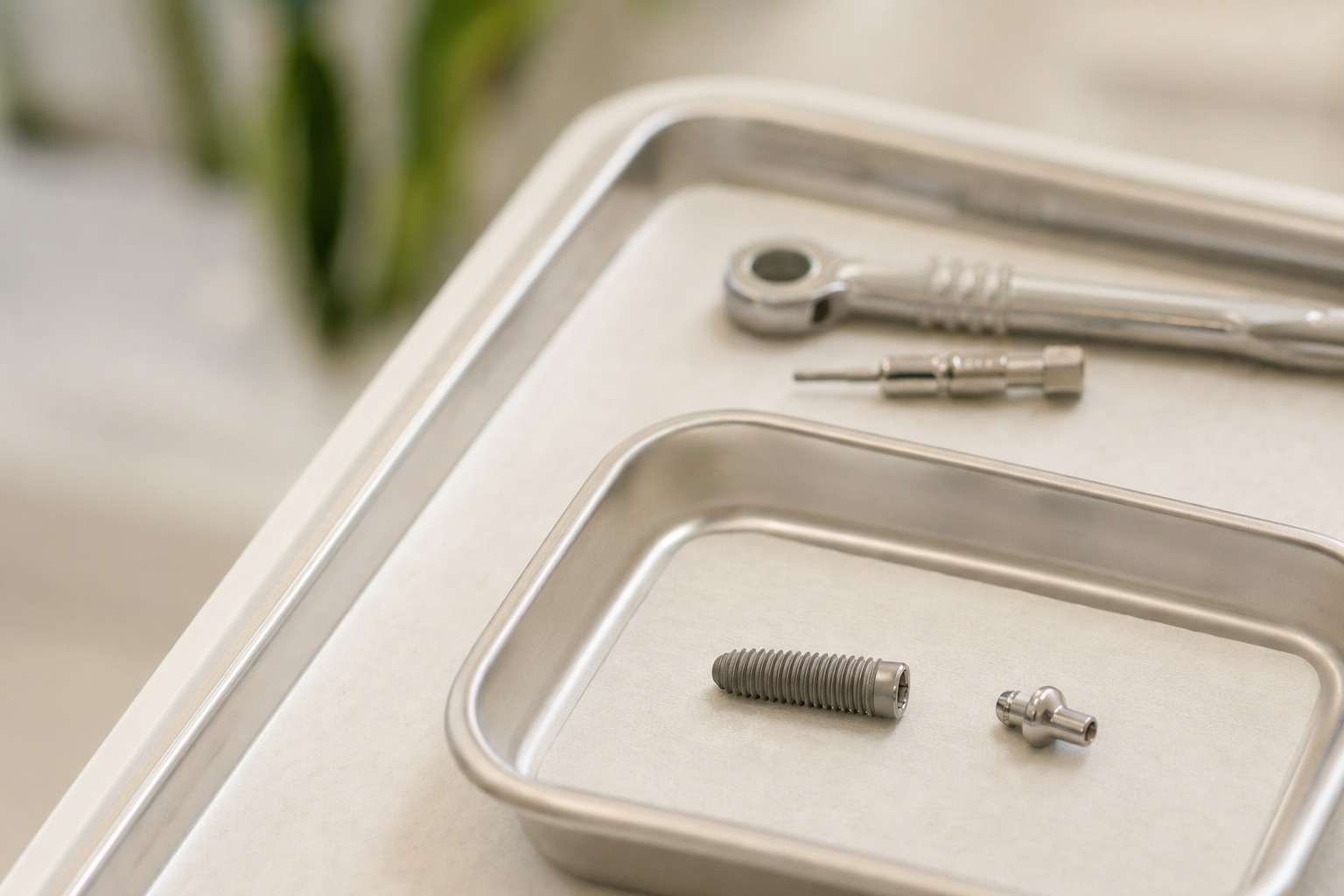
An implant isn't the only way to replace a tooth.
Three options, honestly compared. We'll work with you to determine which option best fits your goals and priorities.
An implant
Replaces the root as well as the crown, and leaves the teeth on either side untouched. It lasts the longest of the three and costs the most, and it's the only one that takes months rather than weeks.
A bridge
Faster and cheaper, usually a few weeks. However, the healthy teeth on either side get filed down to carry it. That's a permanent change to two teeth that had nothing wrong with them.
A partial denture
The least invasive and the least expensive, and it is removed at night. It's the least stable of the three, but for some situations, it's the better fit for overall goals and priorities.
We'll work with you to determine which option is the best fit for you.
Implants need something to hold on to.
An implant is a post that fuses to your jawbone, so the bone has to be there to fuse to. When a tooth has been missing a long time, the bone that used to support it shrinks. That doesn't rule an implant out, but it may mean a graft first, which adds time.
Gum health matters as much as bone. Active gum disease gets treated before anything gets placed, because the same infection that loosens teeth will work on an implant. Smoking slows healing and raises the failure rate, and if you grind your teeth you'll need a night guard to protect the crown.
A scan at the consultation answers most of this in one appointment. If the honest answer is that now isn't the right time, or that you'd be better served by something else, that's what you'll hear.
How long this actually takes.
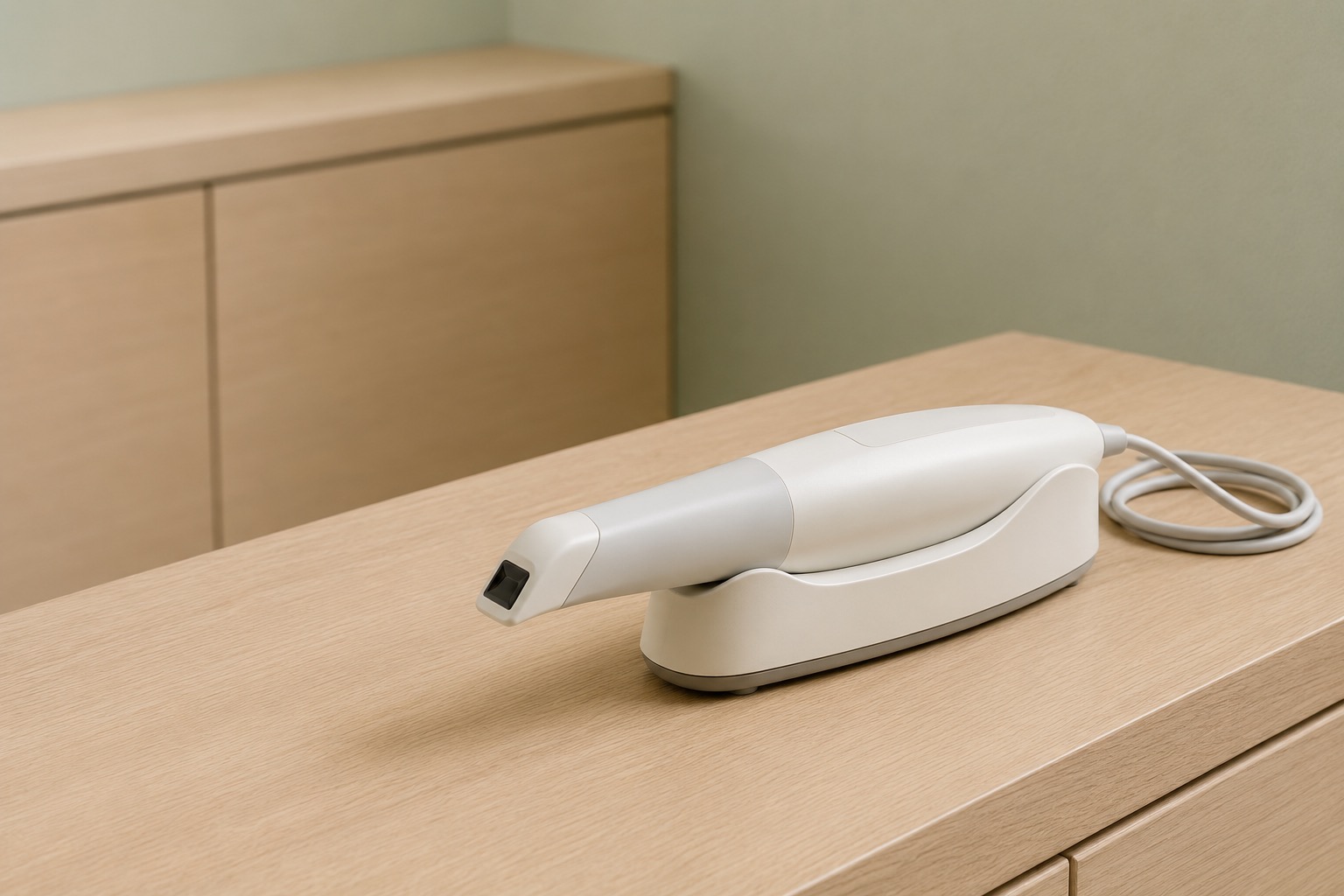
Consultation and a 3D scan
We look at bone, gum health, and how your bite comes together, then walk through the options with real numbers against each one. You leave knowing the full cost and the full timeline before committing to anything.
Placing the implant
Done here, under local anesthetic, by Dr. Grewal. The post goes into the jawbone and the gum is closed over it. Most patients compare the recovery to an extraction and manage on over-the-counter pain relievers.
Healing, which is mostly waiting
This is the part that makes an implant a months-long project. The bone grows onto the post and locks it in place, and nothing speeds that up. You're not toothless in the meantime; a temporary covers the gap where it shows.
The abutment and the crown
Once the post is solid, a connector goes on and an impression is taken for the crown, matched to the teeth around it. The crown is fitted, checked against your bite, and that's the tooth finished.
Treat it like a tooth
Brush it, floss around it, keep your checkups. Implants don't get cavities, but the gum and bone around them can still get infected, which is the main reason one fails years later.
The number you should ask any dentist for.
An advertised implant price is usually the post alone. The abutment, the crown, and any bone graft are separate, and together they're most of the cost.
You'll get the whole figure in writing at the consultation, itemized, before you decide anything.
Most plans cover part of this and almost none cover all of it. We check your actual benefits rather than guessing from the plan name.
Common questions about implants.
Does placing an implant hurt?
Not during. The area is fully numb, and most patients say it was easier than they expected, closer to having a tooth out than what they'd imagined surgery would feel like. Some soreness and swelling for a few days afterward is normal.
Why does it take months?
Because the bone has to grow onto the post and hold it, and biology sets that pace. Rushing the crown onto an implant that hasn't fused is how implants fail. Any practice offering you a finished tooth in two weeks is either doing something different from this, or cutting a corner.
Will I be without a tooth while it heals?
Not visibly. If the gap shows when you smile or talk, we'll fit a temporary to cover it while the implant heals underneath.
How long does an implant last?
The post itself often lasts decades and frequently for life. The crown on top is the part that wears, and it may need replacing at some point, the same as any other crown.
Can I get one if I smoke?
Usually yes, but the failure rate is meaningfully higher and healing takes longer, so you should know that going in rather than after. Cutting down around the surgery and the healing period makes a real difference, and we'd rather have that conversation honestly than pretend it doesn't matter.
What if I've been missing the tooth for years?
Still worth asking about. Bone shrinks where a tooth used to be, so a graft may be needed first, which adds a few months. Plenty of people get implants long after the fact.
I'm nervous about the surgery part.
Say so when you book, and we'll plan the appointment around it rather than treating it as an afterthought. There's more on our Nervous Patients page.
Keep exploring: All Services · Our Approach · Nervous Patients
Find out whether an implant is even the right answer.
A consultation and a scan tell you where you stand, what the options are, and what each one costs. Including the ones that aren't implants.