
Straighter teeth, without anyone noticing you're working on it.
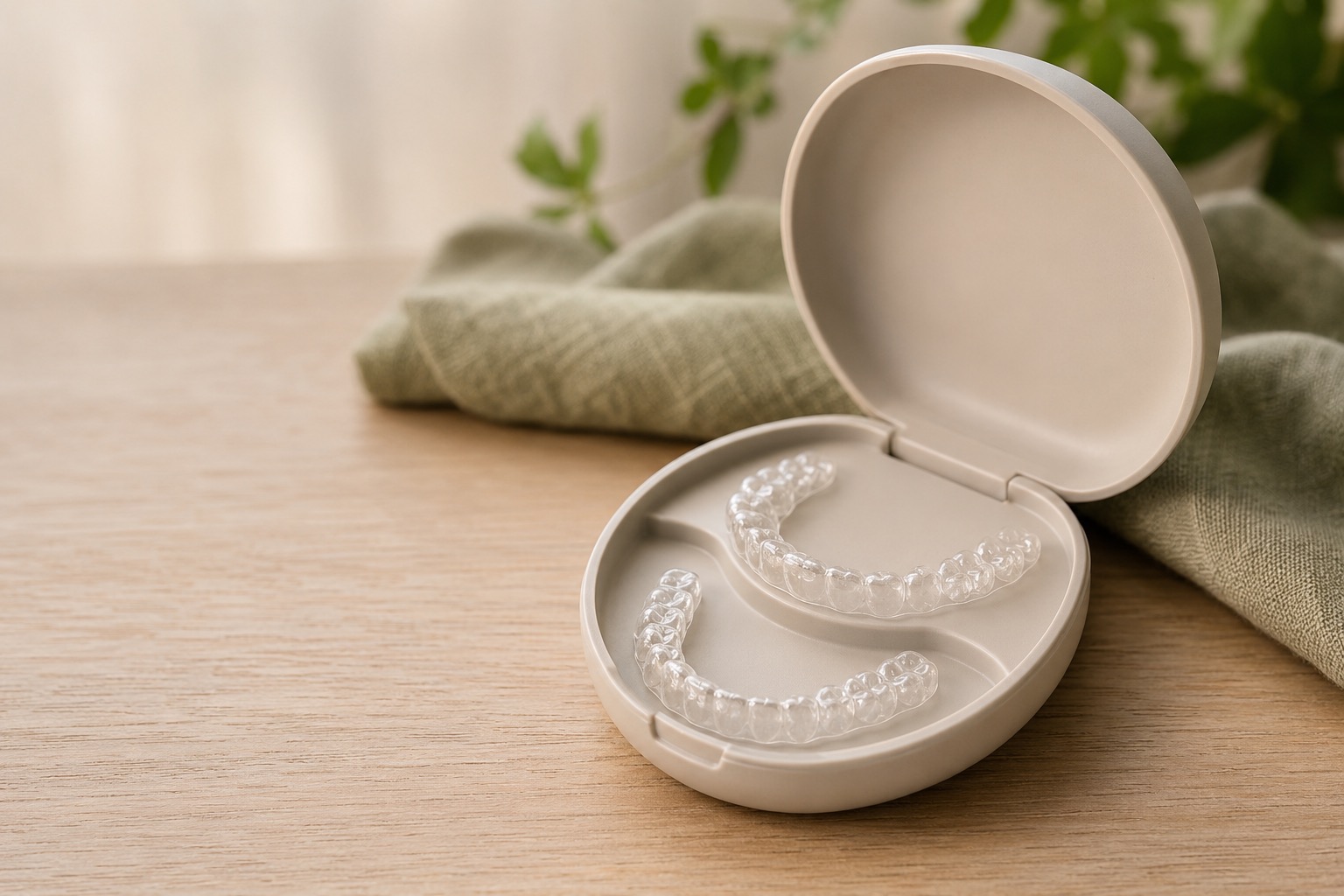
Clear aligners move your teeth gradually using a series of custom, nearly invisible trays. We'll tell you honestly whether you're a good candidate before you commit to anything.
Not every case is a clear-aligner case.
Clear aligners work well for mild to moderate crowding, gaps, and bite issues. More complex movement, severe crowding, or certain bite problems sometimes need traditional braces or a specialist instead. We'll tell you plainly which category you're in, not talk you into the option we happen to offer.
Here's exactly what to expect.
Consultation and scan
We check whether aligners are a good fit for what you want to change, and walk through the honest alternative if they're not.
Your custom plan
A digital treatment plan maps out how your teeth will move, tray by tray, so you can see roughly where you'll end up before starting.
Wearing your aligners
Each tray is worn about 20 to 22 hours a day and swapped for the next one every one to two weeks.
Check-ins along the way
We check your progress regularly to make sure treatment is tracking the plan.
Retention
Once treatment is done, a retainer keeps your teeth from drifting back. This part isn't optional, skipping it is the most common reason results don't last.
Priced to your case, not a flat package.
Cost depends on how much movement your case needs, not a flat package price.
You'll get the full number in writing at your consultation.
Most plans offer at least partial orthodontic coverage, and we check your specific benefits rather than guess.
Common questions about clear aligners.
Does it hurt?
Mild pressure for a day or two after switching to a new tray is normal. It's not the same as the soreness from traditional braces adjustments.
How long does treatment take?
Most cases run somewhere between six months and eighteen months, depending on how much movement is needed. You'll get a realistic estimate at your consultation, not a guess.
Can I eat normally?
Yes, aligners come out to eat and drink anything other than water. That's part of why people prefer them, but it also means discipline matters, they only work if you're wearing them as directed.
Will people notice I'm wearing them?
Barely. They're clear and low-profile, which is the main reason people choose this option over traditional braces.
What if I don't wear them enough?
Treatment slows down or the plan needs adjusting. We'll be honest with you about whether you're on track at each check-in.
Am I too old for this?
No. Plenty of adults straighten their teeth well into their 40s, 50s, and beyond. Age isn't the deciding factor, your teeth and bite are.
Keep exploring: All Services · Veneers & Cosmetics · Insurance & Payment
Find out if clear aligners are the right fit.
A consultation and a scan give you a real answer, including whether this is the right treatment for what you want.