
If a tooth needs to come out, you'll know why before it happens.
Losing a tooth understandably feels like a big deal. We'll walk through why it's recommended, what your options are, and exactly what to expect, so nothing catches you off guard.
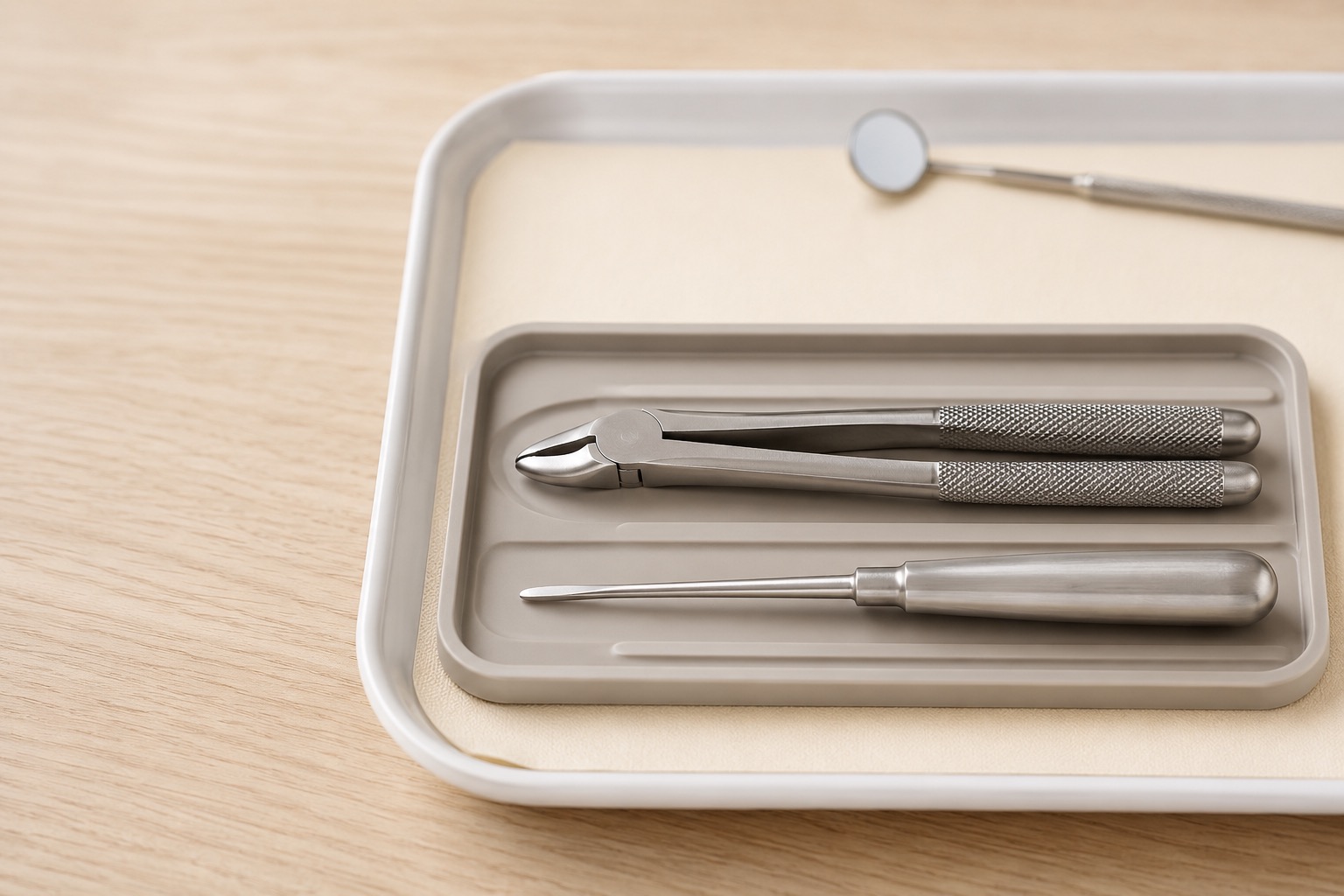
Why a tooth sometimes needs to come out.
Decay or infection too advanced to treat and save
A crack or break that can't be repaired
Advanced gum disease that's loosened the tooth
Impacted wisdom teeth, or crowding before orthodontic treatment
In every case, the goal is to keep your natural teeth whenever that's realistically possible. Extraction only comes up when it's genuinely the better option.
We look at every option first.
Extraction is never the easy default. Before it's ever recommended, we look at whether the tooth can be treated instead, a filling, a root canal, a crown, and weigh that against how it would actually hold up over time.
When extraction does come up, it's because keeping the tooth would likely cause more problems than it solves, more pain, more treatment, or a risk to the teeth around it. We'll explain exactly why, in plain language, before you decide anything.

Simple and surgical, explained plainly.
Simple extraction. For a tooth that's visible and accessible above the gumline. It's removed in one appointment using local anesthetic.
Surgical extraction. For a tooth that needs a little more, often an impacted wisdom tooth or one broken below the gumline. It takes a bit more time and sometimes a small incision, but the goal is the same: getting it out safely and comfortably.
Here's exactly what to expect.
Every step is explained before it happens, and we'll take the time you need to feel ready. If you're anxious, say so, comfort options are available.
Evaluation & X-rays
We look at the tooth and the bone around it so nothing is a surprise once we start.
Discuss your options
We walk through why extraction is recommended for this specific tooth, and answer whatever questions you have.
Comfort & anesthesia
We numb the area fully before starting, and check in with you as we go.
Tooth removal
Usually the fastest part. Most simple extractions take just a few minutes.
Aftercare instructions
We walk through exactly what to do for the next few days before you head home.
Follow-up care
We check in to make sure healing is on track, and we're a call away if anything feels off.
Recovering, step by step.
Some swelling, soreness, and minor bleeding are normal. Rest, and avoid rinsing or spitting forcefully, it can disturb healing.
Stick to soft foods and lukewarm liquids for the first day or two. Skip anything hot, hard, crunchy, or that needs a straw.
Gently brush your other teeth as usual, and start rinsing carefully with warm salt water after the first 24 hours.
Heavy bleeding, pain that's getting worse instead of better after a few days, fever, or increasing swelling, call and we'll get you in.
They're specific to your extraction for a reason. Skipping them is the most common cause of a slower recovery.
Not every extraction needs a replacement.
Some teeth, wisdom teeth especially, don't need to be replaced at all. When replacement does make sense, options like a dental implant, a bridge, or a partial denture are discussed based on your specific situation, not a one-size-fits-all recommendation.
More on the options: Dental Implants →
Common questions about extractions.
Does getting a tooth pulled hurt?
You shouldn't feel pain during the extraction itself, the area is fully numbed first. Some soreness for a few days afterward is normal and manageable with over-the-counter pain relievers.
How long does an extraction take?
A simple extraction is often done in just a few minutes. A surgical extraction, like an impacted wisdom tooth, usually takes longer, sometimes 20 to 45 minutes depending on the tooth.
How long does recovery take?
Basic healing takes about a week to ten days. The bone underneath takes longer to fully heal, but most people are back to normal activities within a few days.
What can I eat after an extraction?
Soft foods and lukewarm liquids for the first day or two, think yogurt, mashed potatoes, soup once it's cooled. Avoid anything hot, hard, crunchy, or that requires a straw, the suction can disturb healing.
Will I need stitches?
Sometimes, especially with surgical extractions. If you do, we'll tell you whether they dissolve on their own or need to be removed at a follow-up.
Are wisdom teeth always removed?
No. Plenty of people keep wisdom teeth that are healthy, properly positioned, and not causing problems. We only recommend removal when there's a real reason to.
What happens if I don't remove a damaged tooth?
It depends on the tooth, but leaving a badly decayed or infected tooth in place usually means the problem gets worse, more pain, a spreading infection, or damage to the teeth next to it.
Can a tooth be saved instead?
Sometimes, and we always look at that first, see "We look at every option first" above for how we decide. Extraction only comes up when saving the tooth isn't realistically the better option.
Does insurance cover extractions?
Often, at least partially, especially when it's medically necessary rather than elective. We check your specific benefits beforehand. More on Insurance & Payment.
Don't wait on a tooth that's causing problems.
The longer a damaged tooth sits, the more likely it complicates things. An evaluation is how we find out what's actually going on, and what your options are.